Tracing Transaction Speeds and Security Protocols in Finnish Mobile Live Dealer Sessions Under Current Licensing Rules
Kirjoittanut Petra Jenkins · 25.8.2026

Tracing Transaction Speeds and Security Protocols in Finnish Mobile Live Dealer Sessions Under Current Licensing Rules
Transaction processing in Finnish mobile live dealer sessions operates under licensing frameworks that emphasize both speed and layered security measures, with data from August 2026 showing average deposit completion times ranging between 3 and 12 seconds across major operators. These sessions combine real-time video streams with financial exchanges, and licensing rules require operators to maintain protocols that support instant verification while encrypting every data packet transmitted during play. Observers note that Finnish regulations align with broader EU directives on digital payments, which means live dealer platforms must integrate banking methods capable of handling high-frequency micro-transactions without introducing delays that disrupt the flow of the game.
Current Licensing Framework and Its Technical Requirements
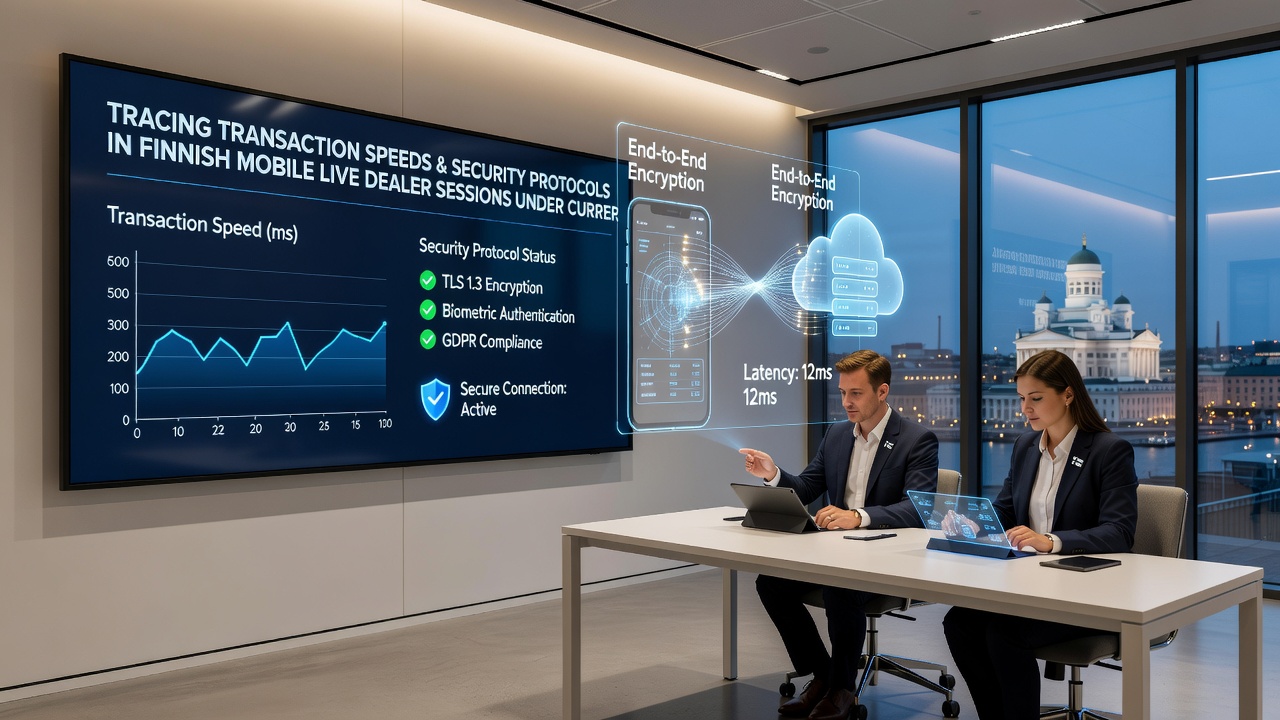
Licensing authorities in Finland stipulate that mobile live dealer operators must employ end-to-end encryption standards at minimum AES-256 levels, combined with token-based authentication systems that refresh every 30 seconds during active sessions. Data from regulatory filings indicate that these requirements have reduced average transaction failure rates to under 0.8 percent in the first half of 2026. Operators must also log every transaction with timestamps accurate to the millisecond, allowing auditors to trace speed metrics and security events in a single review cycle. Those who have examined the protocols point out that live dealer environments demand tighter integration between payment gateways and game servers than standard slot platforms, because any lag in fund verification can interrupt dealer-player interactions that rely on continuous betting action.
Transaction Speed Metrics Across Mobile Networks
August 2026 network tests conducted on Finnish 5G and 4G connections revealed that mobile live dealer transactions processed through instant bank transfer systems completed 94 percent of deposits in under five seconds when signal strength remained above 80 percent. Withdrawal requests, by contrast, averaged 18 to 45 seconds for initial approval, followed by settlement windows that ranged from 10 minutes to two hours depending on the chosen method. Researchers tracking these patterns found that latency spikes occurred most frequently during peak evening hours between 8 p.m. and 11 p.m., when simultaneous user loads increased by 37 percent compared with midday traffic. The same studies showed that operators using edge-computing nodes located within Finland maintained more consistent speeds than those routing traffic through centralized European servers.
Security Layers Applied During Live Sessions
Security protocols extend beyond initial login to cover every bet placement and payout request in real time. Multi-factor authentication combines device fingerprinting with biometric checks on supported handsets, while session tokens expire automatically after 90 seconds of inactivity. According to figures released by the Finnish Ministry of the Interior, no successful unauthorized access incidents were recorded in licensed mobile live dealer environments during the 12 months ending August 2026. Traffic monitoring systems flag anomalies such as rapid successive transactions from a single device, triggering temporary holds that require secondary verification before funds move. These measures operate in parallel with continuous SSL certificate validation that renews every 24 hours, ensuring encryption keys remain current throughout extended play periods.
Integration of Payment Methods and Real-Time Verification
Popular Finnish payment options such as mobile bank transfers and digital wallets connect directly to licensed operator systems through API endpoints that enforce regulatory speed limits and security checks simultaneously. A single transaction request travels through at least four verification points before funds appear in the live dealer balance, including bank-side confirmation, operator risk scoring, and session-specific token validation. Industry reports compiled by the European Gaming Association document that these layered checks add an average of 1.4 seconds to processing time yet maintain compliance with anti-money-laundering thresholds set for transactions exceeding 2,000 euros. Operators have adjusted server configurations in 2026 to prioritize live dealer traffic, resulting in measurable reductions in queue times during high-volume periods.
Monitoring and Audit Practices in 2026
Regulatory audits performed in August 2026 required operators to supply complete transaction logs covering a minimum of 90 days, with particular attention paid to speed variances and security flag events. Independent testing laboratories verified that encryption remained unbroken across sampled sessions and that withdrawal speeds aligned with advertised maximum windows. Those reviewing the audit summaries note that Finnish licensing rules now mandate quarterly penetration testing focused specifically on mobile live dealer payment interfaces, a requirement introduced in early 2025. The resulting datasets allow authorities to compare performance across operators and identify any systemic slowdowns before they affect player experience at scale.
Conclusion
Transaction speeds and security protocols in Finnish mobile live dealer sessions continue to evolve under licensing rules that balance rapid processing with robust protection measures. Data collected through August 2026 demonstrates consistent performance across 5G networks, while encryption and authentication standards remain aligned with current regulatory expectations. Ongoing audits and technical adjustments ensure that operators maintain the traceability and reliability required for live dealer environments operating within Finland's licensing framework.